Find a space where you won’t be interrupted.
Pick one of your favorite songs or create a playlist.
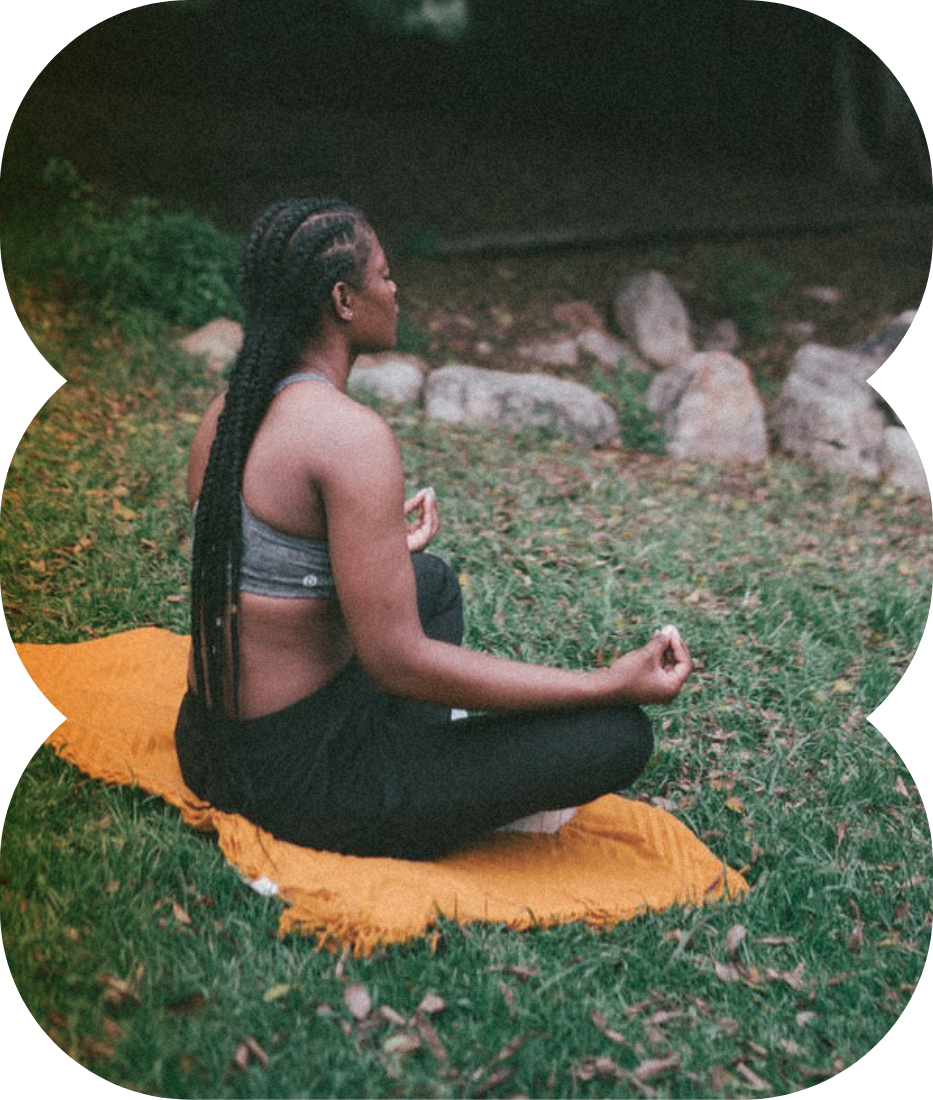
Relax into a comfortable position and ask yourself:
- “How does my body feel?”
- “What are some sounds I might not have noticed before?”
- “How does this song make me feel emotionally?”
Looking for a playlist? Check out our selection of songs here.
Put your hand on your belly and take a big deep breath so that your belly goes up, and then with a long slow exhale feel your belly go back down.
Kids can do this too!
Journaling can help us check in with ourselves and express our emotions, and find a sense of calm.
- How am I really feeling today? What do I need at this moment?
- What am I afraid of and how is it limiting me?
- If I had a time machine, what comfort would I offer my younger self?
- If I could do anything in the next year, what would it be?
Forget sitting still! Shaking meditation helps you let go of tension in your mind and body.
Stand with your feet apart and knees slightly bent.
Start gently shaking your body, starting with your legs and spreading your movement to the arms, chest, and back. Try this for 5–15 minutes.
You can also add music from our Live Beyond playlist on Spotify.
Self-compassion, or being kind and understanding towards ourselves, comes with health benefits. It is linked to decreased anxiety, depression, rumination, and fear of failure.
- Think about times close friends felt really bad about themselves.
- Write down or visualize what you would do and say, and the tone you’d use.
- Think about times you felt bad about yourself. How do you typically respond to yourself in these situations?
- Notice a difference? Ask yourself why you’re harder on yourself.
- Visualize or write down how things might change if you responded to yourself the same way you’d respond to a close friend.
Courtesy of self-compassion.org
Progressive muscle relaxation can help reduce stress, anxiety, and tension. It can also help you feel more connected to your body and improve your sleep.
- Sit or lie in a quiet spot.
- Close your eyes and breathe deeply.
- Curl your toes, hold for 5–10 seconds, then release for 15–20 seconds.
- Tense and relax each muscle group. Next, you could move to your legs by tightening your calves and thighs, then on to your stomach by squeezing your abs.
- Hold that tension for 5–10 seconds, then relax 15–20 seconds.
- Revisit tense areas as necessary.